Not official results. Only INEC declares election results in Nigeria. Binchika is a citizen transparency layer. No party ads · equal space for all 22 parties · our rules

About · rules · limits

The maths, in public.

Binchika is Africa's First Decentralised Election Ledger: a citizen transparency layer, not an election system. It counts what citizens photograph, compares it with what INEC uploads, and chains every step into a ledger anyone can verify. Only INEC declares official results.

What it is, and isn't

It is

  • A public ledger of citizen-verified polling-unit tallies
  • A comparison with INEC's IReV uploads, with mismatches shown
  • Open-source maths: consensus, thresholds, baselines
  • A forkable protocol any African civic group can run

It isn't

  • An election authority or "election system"
  • A declaration of winners or projected victories
  • A party platform: no ads, no paid placement
  • A replacement for INEC or the courts

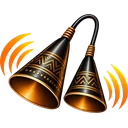
The name comes from the Hausa verb bincika: to investigate, examine, look into. Mu bincika tare: let us examine it together. The mark is the agogo, the West African double bell rung to call people's attention.

Neutral by construction

  • No party advertising, sponsorship or paid placement, in any form.
  • All 22 registered parties get identical cards in shuffled order. Colours are alphabetical slots and mean nothing.
  • Every fact has a source; anything unverified is labelled. See every source →
  • Discrepancy flags show their evidence and reason. They are not accusations.
  • Verifiers are unpaid, bound to their own state, and can only flag. Only a superadmin approves a correction, and every correction is a new public ledger entry.

"Africa's First": an honest status check

Already true

  • Live, append-only, hash-chained ledger that anyone can re-verify in their browser
  • Consensus, IReV comparison, constitutional thresholds and baseline checks are open code with tests
  • INEC registered-voter baselines captured with document hashes and timestamps (37 states; 56 LGAs so far)
  • MIT-licensed protocol with a 48-hour fork guide

Still to prove

  • Evidence on IPFS with independent pinners (R2 storage still to be switched on)
  • Election-day scale: 176,846 units, OCR accuracy, many intake channels
  • Verifier anonymity is pseudonymous today, not zero-knowledge
  • "First" has not been independently surveyed; we say "first we know of"

The Binchika Protocol: fork it

Ghana, Kenya, Senegal or anywhere else: drop in your polling-station boundaries, your electoral body's results source and your legal thresholds, and stand up a local ledger in about 48 hours. Nigeria is the first tenant.

Risks and limitations

Legal
  • Binchika numbers are not official results; treating them as such would be misinformation. Hence the INEC notice on every page.
  • A wrongly flagged discrepancy could harm reputations. Flags need consensus, show their evidence, and are corrected publicly.
  • Data protection (NDPA 2023): reporter handles are salted hashes; verifier ID numbers are stored only as hashes.
Technical
  • Coverage at 176,846 units will be uneven. Missing units are shown as missing, never estimated.
  • Machine reading of handwriting makes mistakes; low-certainty reads go to people.
  • Platforms change APIs and limits; intake uses several channels with queues and retries.
Trust
  • Any hint of partisanship would end the project: equal coverage, alphabetical colours, public code.
  • The news reel reflects what the press covers. Outlets take turns; it is not rebalanced by party, because that would be editorial.
  • Demo views use fictional parties behind striped warnings so screenshots cannot pass as results.

Contact

Talk to us.

Manifestos, data requests, corrections, verifier questions, press. Every message reaches a person. Images you attach are compressed in your browser before upload, and stay visually identical.

Up to 5 files, 10 MB total · images, PDF, Word, Excel, text